SME
GRC - Why It’s Not Just a "Big Company" Problem Anymore

Samuel Mihalcik
Senior Consultant
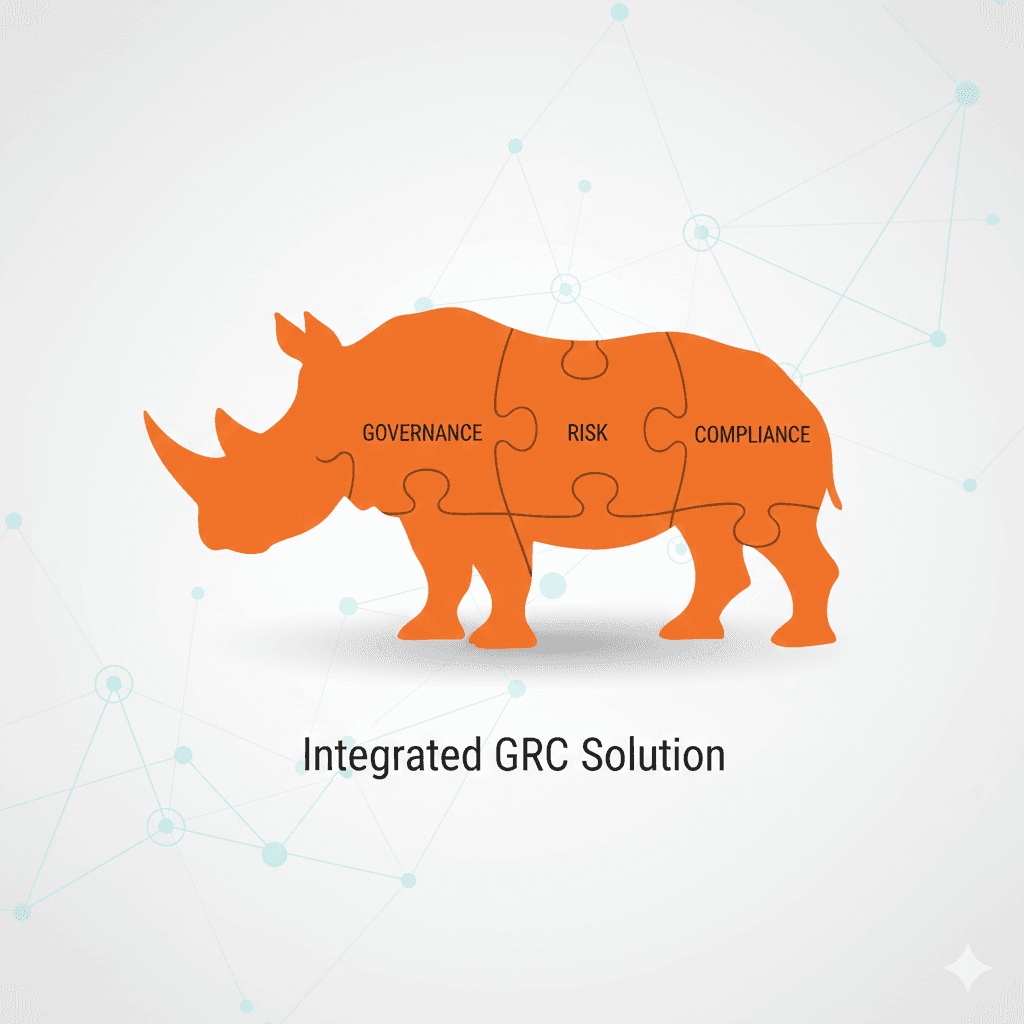
In the past, "GRC" seemed to be reserved for the legal departments of regulated or Fortune 500 companies. But recently, the landscape has changed. Whether you’re a mid-sized manufacturer or a growing tech firm, the "Rhino-skin" of your organization is tested every day by evolving compliance requirements, sophisticated cyber threats, or industry specific regulations.
For an SME, a single compliance failure or an unmanaged risk isn't just a legal headache, it’s a threat to your reputation and your bottom line.
Breaking Down the Three Pillars
Think of GRC as the skeletal system of your business. Without it, the organization can’t support its own weight as it grows:
Governance: This is your "North Star." It’s the set of rules, high-level policies, and internal controls that ensure your company’s actions align with its business goals. Good governance means everyone knows who is responsible for what.
Risk Management: This is your early warning system. It involves identifying potential "potholes" (from supply chain disruptions to data breaches) and deciding before they happen how you will avoid, mitigate, or accept them. Mitigation will require implementation of adequate controls.
Compliance: This is your "Proof of Work." It’s the process of documenting that you are meeting (legal) requirements like GDPR or ISO and internal policies. It’s what you show an auditor to prove you’re doing what you said you’d do and your environement expects you to do.
The SME Reality: 3 Practical Tips to Start Today
You don’t need a 50-person legal team to master GRC. Start quickly with these three steps to build a more resilient business:
Map Your "Crown Jewels": Identify your most critical assets. Is it your customer data? Your proprietary software? Your physical warehouse? Focus your risk assessment here first. If you try to protect everything equally, you protect nothing effectively.
Ditch the "Spreadsheet Chaos": Most SMEs manage risk via fragmented Excel sheets. This is dangerous because version control fails, and data gets lost. Move toward a single source of truth.
Adopt the NNTedt Principle: At RiskRhino, we live by "No Need To enter data twice." When you update a risk assessment, it should automatically reflect in your compliance reports and governance policies. Integration saves hours of "busy work" and reduces human error.
The RiskRhino Philosophy
Make GRC easy, use best practice standards and engage key players by giving them feasible tasks. Do not approach the three pillars as separate silos. This leads to what we call "Data Fatigue" the exhausting cycle of entering the same information into three different systems for three different managers.
We believe GRC should be visible and integrated and automated. When your GRC is automated and connected, it ceases to be a bureaucratic burden and becomes a blueprint for success. It gives you the confidence to move faster than your competitors because you know exactly where the boundaries are.
The Bottom Line
Effective GRC isn't about avoiding all risk. That’s impossible in business. It’s about having the visibility to take the right risks to grow your business safely and sustainably.